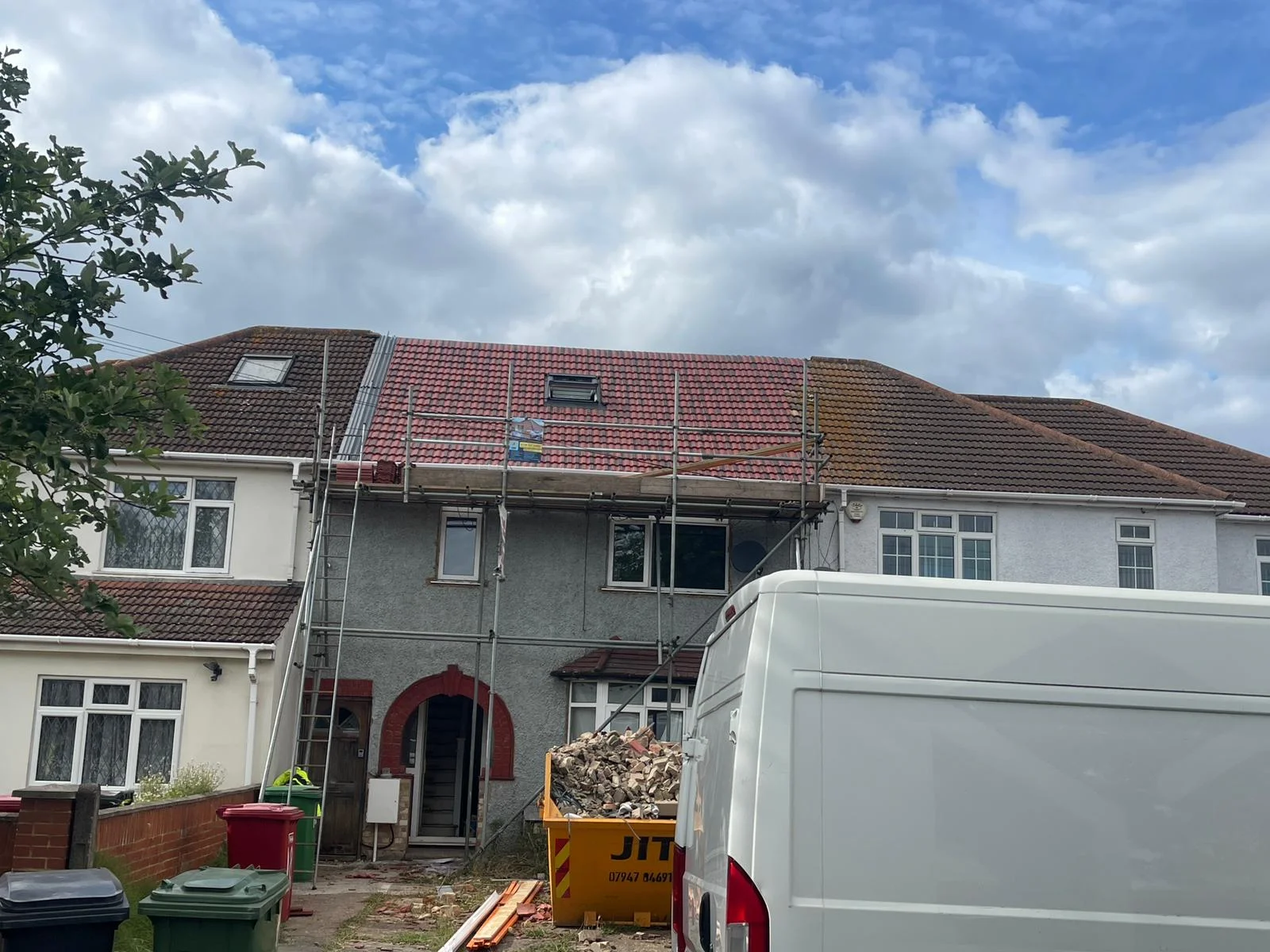
Lead Flashing Repair in Watford — Expert Roofing Services by ACE London Roofing
If you’ve noticed water stains on your ceiling, damp patches near a chimney breast, or moisture gathering around a skylight or roof extension, deteriorating lead flashing is very likely the cause. Lead flashing is the thin strip of metal that seals the critical joints where your roof meets a vertical surface — and when it fails, even a small gap can allow significant water ingress. For homeowners and property managers in Watford, ACE London Roofing provides fast, reliable lead flashing repair carried out by experienced roofers who understand the specific demands of the area’s housing stock.
What Is Lead Flashing and Why Does It Fail?
Lead flashing is installed at the junctions between a roof slope and any vertical surface — chimneys, dormer walls, parapet walls, skylights, and roof extensions are the most common locations. It acts as a waterproof seal, channelling rainwater away from these vulnerable joints and preventing it from penetrating the roof structure below.
Despite lead being one of the most durable roofing materials available, it is not immune to wear. The most common causes of lead flashing failure include:
- Thermal movement: Lead expands and contracts with temperature changes. Over years, this repeated movement can cause the flashing to crack, lift, or pull away from its mortar joint.
- Failed pointing: The mortar that holds lead flashing into the raggle (the groove cut into brickwork) deteriorates over time, allowing water behind the flashing.
- Oxidation and fatigue: Older lead can become brittle, developing hairline cracks that are difficult to spot from ground level.
- Storm damage: High winds can lift or displace improperly secured flashing, particularly on chimney stacks.
- Poor original installation: Flashing that was never correctly fixed or lapped will fail prematurely regardless of material quality.
Lead Flashing Repairs in Watford — Understanding the Local Context
Watford’s residential streets are characterised by a wide mix of property types — Victorian and Edwardian terraces with traditional chimney stacks remain common across areas such as Oxhey, Nascot Wood, and Callowland. These older properties typically feature original or period-replaced lead flashing around chimneys and bay window roofs, which are often well overdue for inspection or repair.
More modern developments across the Watford area, including semi-detached properties built during the interwar and postwar periods, frequently use code 3 or code 4 lead sheet — thinner grades that are more susceptible to fatigue cracking, particularly in areas exposed to prevailing southwesterly winds and temperature fluctuation through the seasons.
The area also includes a significant number of converted and extended properties with flat roof sections and pitched roof junctions — precisely the kind of detail where lead flashing plays a critical sealing role. ACE London Roofing works with all of these property types and understands the nuances of working on older masonry as well as modern build extensions.
Our Lead Flashing Repair Process
ACE London Roofing follows a structured approach to every lead flashing repair, ensuring a lasting result rather than a temporary patch.
- Initial assessment: We carry out a thorough inspection of the affected flashing and surrounding roof area. We’ll identify whether the issue is isolated or symptomatic of wider deterioration.
- Honest recommendation: If the existing lead is in sound overall condition, re-pointing and re-sealing may be sufficient. If the lead itself is fatigued or cracked, replacement will be recommended — we’ll always explain why.
- Safe access: We use appropriate ladders, scaffolding, or mobile access equipment depending on the roof height and configuration, in line with working at height safety requirements.
- Repair or replacement: Repairs may involve re-pointing with appropriate mortar, re-dressing the existing lead, or cutting and fitting new lead sheet to the correct code specification for the location. We always use genuine lead sheet rather than cheaper aluminium or bitumen alternatives where lead is specified.
- Inspection and sign-off: Once complete, we inspect the full repair area and remove all debris and offcuts. We’ll walk you through what was done and why.
Signs You Need Lead Flashing Repair
You don’t always need to access your roof to spot potential flashing problems. Look out for:
- Damp or water stains on ceilings or walls, particularly near a chimney breast or roof window
- Visible gaps or lifted sections of lead when viewed from ground level or an upstairs window
- Crumbling or missing mortar at the junction between lead and brickwork
- Efflorescence (white salt deposits) on brickwork below a chimney or parapet
- Mould growth in loft spaces directly beneath roof junctions
If you recognise any of these signs, it is advisable to have the flashing inspected promptly. Water ingress at roof level can cause secondary damage to roof timbers, insulation, and internal plasterwork that becomes significantly more costly to address if left untreated. You can learn more about the importance of timely roof maintenance on our roofing services page.
Do You Need Planning Permission for Lead Flashing Repair in Watford?
In most cases, lead flashing repair is considered routine maintenance and does not require planning permission. However, if your property is located within a conservation area — parts of Watford town centre and some older residential streets carry conservation status — or if it is a listed building, you may need to notify the local planning authority before carrying out certain types of roof work.
For guidance specific to your property, the Planning Portal provides up-to-date information on permitted development rights and conservation area obligations in England. ACE London Roofing can also advise you based on our experience working in and around heritage-sensitive areas across London and Hertfordshire.
Why Choose ACE London Roofing for Flashing Repairs in Watford?
ACE London Roofing is a trusted roofing contractor serving Watford and the wider region. We bring the same standards of workmanship to every job regardless of scale — from a single chimney flashing repair to a full roof refurbishment. Our roofers are experienced with traditional lead work and modern flat roof junctions alike, and we work on all property types from Victorian terraces to contemporary extensions.
We provide written quotations, clear timelines, and honest advice. If a repair will suffice, we’ll tell you. If a replacement is the more cost-effective long-term choice, we’ll explain that too. You can explore the full range of work we carry out across the region on the ACE London Roofing homepage.
We also carry out related services including chimney repairs, flat roof maintenance, and general roof inspections. If you’re based in or near Watford and have concerns about your roof, our teams are local and can respond quickly. For related roofing work in nearby areas, see our roofing services across Hertfordshire page.
Frequently Asked Questions About Lead Flashing Repair in Watford
How long does lead flashing last?
Quality lead flashing, correctly installed to the appropriate code (typically code 4 or code 5 for most residential applications), can last 50 to 100 years. However, lifespan depends on the grade of lead used, the quality of original installation, and how well it has been maintained. The mortar pointing that secures the flashing into brickwork typically requires attention every 10 to 20 years.
Can lead flashing be repaired rather than replaced?
Yes, in many cases a repair is entirely appropriate. If the lead itself is structurally sound but the mortar has failed or the flashing has simply lifted, re-pointing and re-dressing the existing lead is a cost-effective solution. Replacement is generally recommended when the lead is cracked, fatigued, or when it is below the minimum thickness for its application.
How much does lead flashing repair cost in Watford?
The cost depends on the extent of the repair, access requirements, and whether re-pointing alone is sufficient or new lead sheet is needed. Minor repairs to a chimney flashing may be completed within a few hours, while more extensive work on a parapet wall or flat roof junction will naturally take longer. ACE London Roofing provides transparent, itemised written quotations — contact us for a no-obligation assessment.
Is lead flashing the same as lead sheet or lead soakers?
Lead flashing is the broad term for any lead used to seal roof junctions. Within that, there are specific types: step flashing follows the line of a roof slope up a wall; cover flashing or cap flashing is embedded into the mortar joints above; soakers are small individual pieces tucked beneath roof tiles at the side of a chimney or abutment. All of these may be involved in a chimney flashing repair, and ACE London Roofing works with all types.
Will you spot other roof problems during a flashing repair?
Our roofers will always carry out a visual inspection of the accessible roof area while on site. If we identify other concerns — slipped or missing tiles, deteriorating mortar on chimney brickwork, blocked gutters — we will bring these to your attention and provide a separate quotation if further work is needed. We do not carry out unrequested work without your approval.
Ready to address a lead flashing problem at your Watford property? Get in touch with ACE London Roofing today for a prompt response and a free, no-obligation quotation.